



Connect and Normalize
Bring operational, endpoint, identity, security, finance, service, and workflow signals into one governed layer.
Platform
An operating intelligence layer above the systems your team already runs.
Hiddendata.ai turns fragmented operational data into ready-to-run capabilities called Reveals. Each Reveal connects systems, uncovers signals, runs governed workflows, generates reporting, coordinates AI-assisted action, and measures the outcomes created.
Product Views
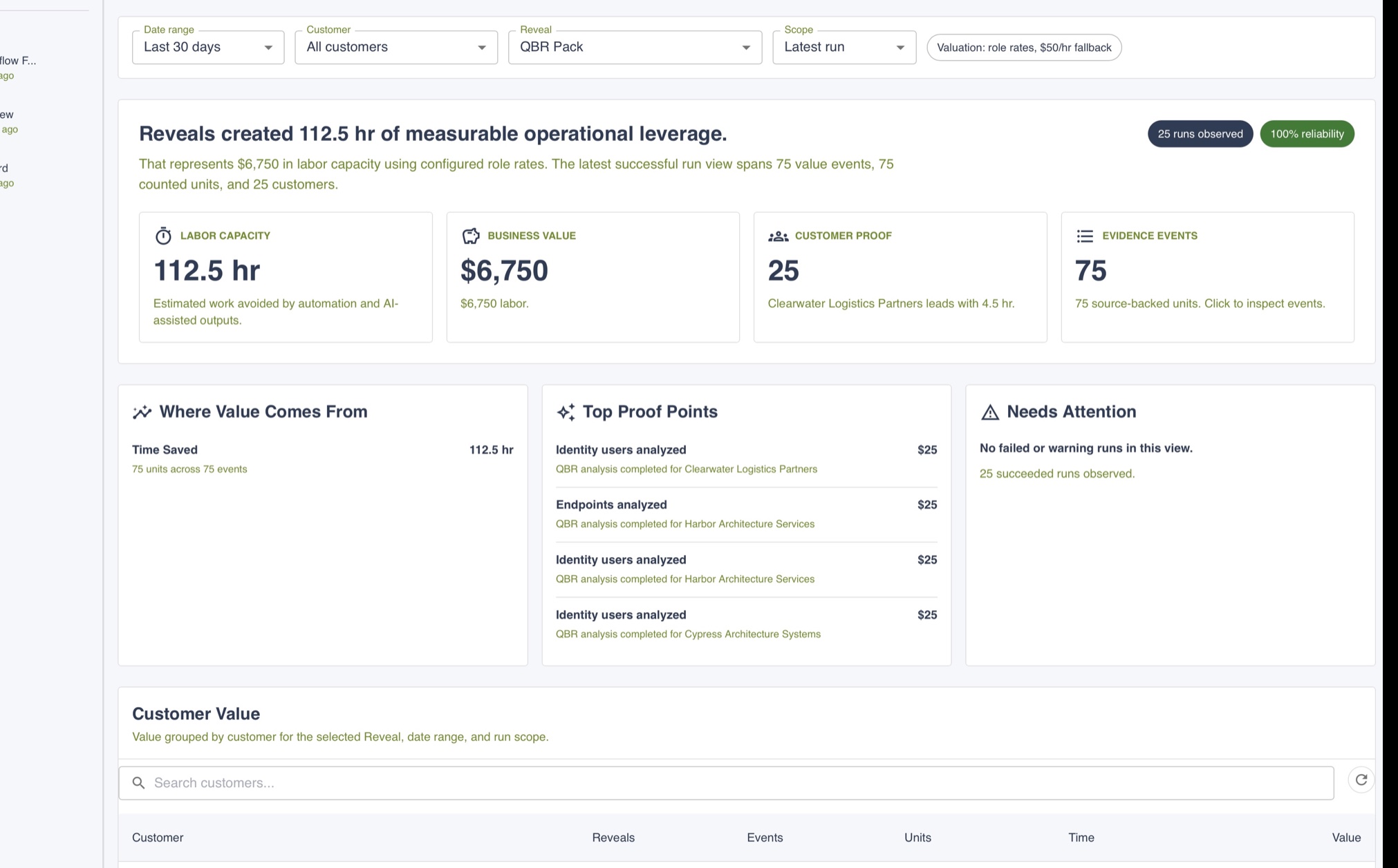
Operating Intelligence
Track time saved, labor value, evidence events, commercial opportunity, run health, and customer impact from the same operating surface your team uses to manage work.
Architecture
Bring operational, endpoint, identity, security, finance, service, and workflow signals into one governed layer.
Turn fragmented events into risks, gaps, opportunities, reporting context, customer proof, and action queues.
Trigger workflows, approvals, reports, and governed automation, then measure time, value, evidence, and reliability.
Capabilities
Connect operational, endpoint, identity, security, finance, service, and workflow systems into one consistent data layer.
Package integrations, workflows, agents, reports, dashboards, approvals, and evidence around a specific business outcome.
Measure labor capacity, business value, customer impact, evidence events, commercial opportunity, and automation health.
Turn important signals into triage queues, escalation paths, repeatable automation, and auditable follow-through.
Generate executive summaries, customer reviews, scheduled reports, dashboards, and evidence-backed artifacts.
Deploy AI agents to investigate issues, summarize context, recommend actions, and trigger approved workflows inside a controlled, auditable system.
Reveals
A Reveal is a packaged capability that connects to source systems, detects hidden signals, runs workflows, generates reports, and coordinates action for a specific job. Use Reveals for customer reviews, risk assessments, license reconciliation, service triage, security follow-up, and other repeatable motions.
Agentic Layer
Hiddendata.ai uses governed AI agents to help teams investigate faster, generate reports, recommend next steps, and automate selected actions with policy, approvals, and auditability.
Operating Model
A single surface for understanding risk, service quality, reporting readiness, operational leverage, and follow-through.
Better prioritization, fewer missed issues, cleaner escalation flows, and clearer operational context across accounts, sites, teams, or customers.
Consistent stakeholder-ready reporting, evidence of value, and a sharper story for reviews, renewals, and leadership updates.
Stronger visibility, actionable signals, and controlled response paths with approvals, AI-assisted investigation, and auditability.
Next Step
We can walk through Reveals, Operating Intelligence, reporting flows, and automation loops against your actual use cases.